How to Store Fresh Fruit by Type and Ripeness
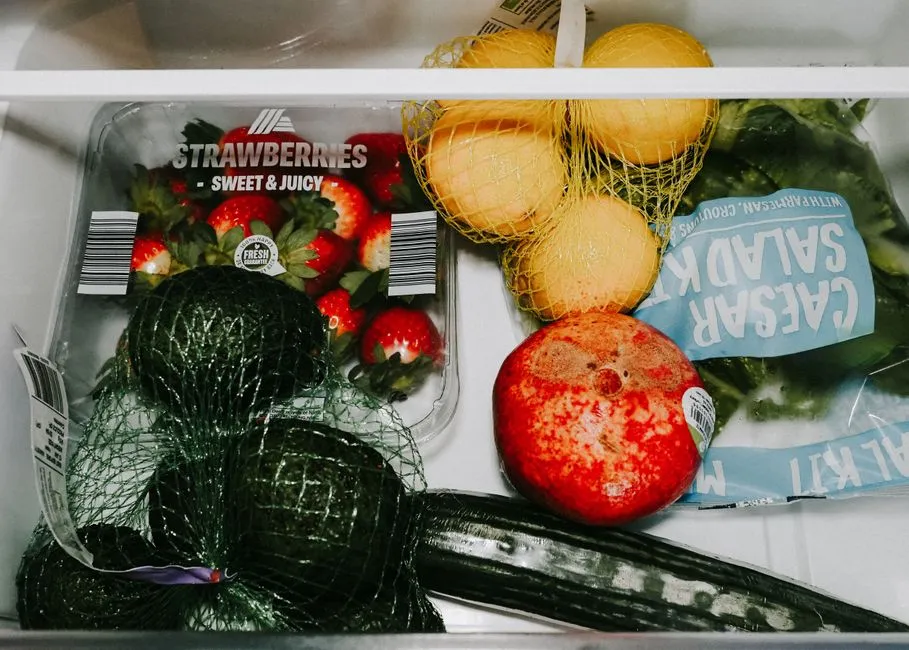
- What is the simplest way to store fresh fruit?
- Which storage route fits the fruit you have?
- Does the fruit still need to ripen?
- When should ripe fruit move into the refrigerator?
- Which fruit should go straight into the refrigerator?
- How much airflow and moisture control does fruit need?
- Should different fruits be stored together?
- How should you store whole melons and cut fruit?
- What is a reliable weekly fruit-storage routine?
- What food-safety steps apply before eating stored fruit?
- Sources
What is the simplest way to store fresh fruit?
Store fruit according to three facts: what kind it is, whether it is ready to eat, and whether it is whole or cut. Firm avocados, kiwifruit, peaches, nectarines, European pears, and plums can finish ripening at room temperature before moving to the refrigerator. Berries, cherries, and grapes belong in the refrigerator. Keep bananas and several flavor-sensitive tropical fruits at room temperature. Refrigerate every cut fruit promptly.
That is the useful answer. “Put all fruit in a bowl” and “put all fruit in the crisper” are both too blunt. A bowl can help a firm pear reach a better eating texture, but it lets a strawberry deteriorate. Refrigeration slows many changes, but it can also prevent proper ripening or damage the eating quality of some fruit.
Which storage route fits the fruit you have?
Use this as a starting map for whole fruit. It follows the quality-first groups in the University of California, Davis Postharvest Technology Center guide, with the fruit's current condition deciding when it changes routes.
| Starting condition | Common examples | First location | Move it when |
|---|---|---|---|
| Firm and capable of ripening after harvest | Avocado, kiwifruit, nectarine, peach, European pear, plum | Counter, away from direct sun | It reaches the aroma and gentle give you want |
| Perishable and already picked at its useful maturity | Blackberries, blueberries, cherries, grapes, raspberries, strawberries | Refrigerator | Keep chilled until shortly before use |
| Ready to eat but you need to slow further change | A ripe avocado, kiwi, peach, pear, or plum | Refrigerator | Use while its condition is still good |
| Quality-sensitive at refrigerator temperature | Bananas and the room-temperature fruit listed below | Counter | Use at the desired stage rather than defaulting to cold storage |
| Cut, peeled, or purchased pre-cut | Any fruit | Refrigerator | Refrigerate promptly and keep covered |
UC Davis places grapefruit, lemons, limes, mandarins, oranges, mangoes, papayas, persimmons, pineapple, pomegranates, muskmelons, watermelons, plantains, and bananas in its room-temperature group. This is a flavor and texture recommendation, not permission to ignore damage, mold, or a label that says the product must remain refrigerated.
Storage tables are guides, not clocks. A Pacific Northwest Extension storage bulletin explicitly calls its times approximate, because prior handling, starting freshness, temperature, humidity, packaging, and the fruit itself all change the useful holding time. Let condition lead and the calendar support it.
Does the fruit still need to ripen?
This is the first question to answer for whole fruit. Climacteric fruit responds to ethylene and can continue ripening after harvest. Non-climacteric fruit does not restart that process in your kitchen; it moves toward softening and decay instead. University of Georgia Cooperative Extension identifies apples, pears, peaches, and plums as climacteric, while berries, cherries, grapes, and watermelon are non-climacteric examples.
Put a mature but firm avocado, kiwi, nectarine, peach, pear, or plum on a counter away from direct sunlight. Check it at least daily. Aroma, a change in background color where appropriate, and slight give under gentle pressure are more informative than an arbitrary number of days. Fruit variety, maturity at harvest, and the room's temperature all matter.
If you want to accelerate suitable fruit, use a paper bag rather than a sealed plastic bag. A bag concentrates some ethylene around the fruit. UC Davis notes that adding a ripe apple can enhance ripening. Leave enough ventilation, open the bag daily, and remove any fruit that is leaking, moldy, or developing an off odor. A sealed plastic bag on the counter can accumulate carbon dioxide, deplete oxygen, slow normal ripening, and encourage off odors and decay.
For a close look at mango selection before this storage decision, see our guide to choosing a ripe mango.
When should ripe fruit move into the refrigerator?
Move counter-ripened avocado, kiwi, nectarine, peach, pear, or plum into the refrigerator as soon as it reaches the eating stage you want but will not be used immediately. Cooling slows further change; it does not restore fruit that is already mealy, fermented, moldy, or collapsing.
Treat the refrigerator as a pause button with limits, not a reset button. Pacific Northwest Extension gives best-quality refrigerator ranges of roughly three to five days for avocado, three to four days for kiwi, peaches, nectarines, pears, and plums, and about one week for papaya and mango. Those are useful planning ranges, not safety guarantees or promises. Inspect the fruit before using it.
Apples are a practical example of intended holding time changing the route. UC Davis lists apples for room-temperature storage when the plan is shorter than seven days and refrigeration when it is longer. Pacific Northwest Extension gives a broader best-quality range of one to four weeks in the refrigerator, depending on the fruit and storage conditions. Store sound apples unwashed in the crisper for a longer hold, and remove one that begins to decay so it does not sit against the rest.
Citrus can stay at a cool room temperature for a shorter plan. Pacific Northwest Extension lists about ten days at room temperature and one to two weeks refrigerated as approximate best-quality guidance. A warm, sunny counter is not a cool room, so move citrus away from heat and direct sun.
Which fruit should go straight into the refrigerator?
Berries, cherries, and grapes do not become sweeter because they spent several days in a fruit bowl. Give them refrigerator space promptly. Sort them first, removing crushed, leaking, spoiled, or moldy pieces. Pacific Northwest Extension recommends storing berries unwashed and keeping the green tops on strawberries until use.
Moisture trapped around delicate fruit speeds visible deterioration. Keep berries in a suitable container that protects them from crushing without sealing in condensation. Do not pack a large quantity into a deep, compressed layer. Our detailed berry storage guide covers sorting, container setup, and washing timing.
Cherries and grapes also benefit from refrigeration and gentle handling. Leave sound fruit attached where practical, avoid adding wash water before storage, and inspect the package bottom for leaked juice or collapsed pieces. Wash the amount you are about to prepare rather than washing the whole supply days in advance.
How much airflow and moisture control does fruit need?
Whole fruit on the counter needs ventilation. UC Davis recommends a vented bowl or perforated plastic bag to reduce moisture loss and warns against sealed plastic bags at room temperature. Keep that setup away from sunlight, a hot appliance, and a window that becomes warm during the day.
In the refrigerator, the same guide recommends perforated bags in produce drawers. The goal is a workable balance: enough enclosure to slow shriveling, with enough ventilation to avoid a persistently wet, stagnant package. Do not make holes with a sharp tool while fruit is inside the bag. Use a purpose-made perforated bag or prepare an empty bag safely before loading it.
Surface moisture changes the plan. Unless a specific packaged product says otherwise, store whole fruit unwashed and wash it immediately before preparation. If fruit arrives wet from condensation, do not close it into a dripping package. Let the exterior dry under clean conditions, replace a soaked absorbent liner, and then refrigerate fruit that belongs in the cold.
Should different fruits be stored together?
Not automatically. Ethylene-producing fruit can speed changes in nearby produce. That is helpful when deliberately ripening a firm pear in a paper bag, but unhelpful when trying to hold other produce as long as possible.
Keep a ripening setup separate from fruit already at the desired stage. In the refrigerator, UC Davis recommends separating fruits from vegetables, ideally using different produce drawers, to reduce unwanted ethylene effects. University of Georgia Extension specifically lists produce including broccoli, cucumbers, green beans, kale, onions, peas, peppers, squash, and watermelon as ethylene-sensitive examples.
Space also prevents pressure damage. Do not stack heavy melons or large citrus on berries, ripe peaches, or soft pears. A crisper drawer is useful only if closing it does not crush what is inside.
How should you store whole melons and cut fruit?
Keep whole melons unwashed at room temperature for a short quality-first hold, following the UC Davis and Pacific Northwest Extension guidance. Do not assume every melon will become sweeter there: University of Georgia Extension lists watermelon as non-climacteric. A counter period cannot correct an underripe harvest.
Once any melon or other fruit is cut, the rule changes. Refrigerate it promptly in a clean, covered container. The US Food and Drug Administration says purchased pre-cut produce should be refrigerated and perishable produce should be kept at 40°F (4°C) or below. UC Davis likewise says all fruit should be refrigerated promptly after cutting.
Do not leave a half melon uncovered in the refrigerator or return serving utensils that have contacted other foods to its container. Date cut fruit when it is not being eaten immediately. If storage history is uncertain, do not use appearance or smell as proof that it is safe.
What is a reliable weekly fruit-storage routine?
- Sort on arrival. Separate fruit that is damaged, ready now, firm enough to ripen, and intended for later use. Do not bury a soft peach under a week of purchases.
- Assign a location. Put berries, cherries, and grapes in the refrigerator; set suitable firm ripening fruit on the counter; keep cut fruit cold and covered.
- Separate ripening fruit. Use a ventilated bowl or paper bag away from direct sun. Keep it apart from produce you do not want to advance.
- Check the counter daily. Turn fruit gently and look underneath. Move ready fruit to the refrigerator if it will not be eaten that day.
- Check cold storage regularly. Use older fruit first. Remove leaking, collapsed, or moldy pieces and clean any spilled juice.
- Plan from the next meal backward. Hold one or two pieces at eating ripeness and keep the rest cooler or less exposed where the fruit permits. This is more reliable than trying to make an entire purchase peak together.
The routine matters more than memorizing a shelf-life chart. A fruit-storage guide cannot know how long the produce spent in transit or on display before you bought it.
What food-safety steps apply before eating stored fruit?
Keep fruit separate from raw meat, poultry, seafood, and the utensils used for them. Wash hands with soap and warm water for at least 20 seconds before and after preparation. Clean cutting boards, counters, dishes, and utensils between raw animal foods and produce.
Wash whole fruit under running water just before preparing or eating it, including fruit whose peel will be discarded. Do not use soap, detergent, or commercial produce wash. The FDA recommends scrubbing firm produce such as melons with a clean produce brush, then drying produce with a clean cloth or paper towel.
Cut away a limited bruised or damaged area before preparation. Discard fruit that looks rotten. Mold on soft, high-moisture fruit is a discard signal, not a trimming project. These handling steps address safety; a good-looking fruit can still have been mishandled, so correct refrigeration and clean preparation remain necessary.
Sources
- University of California, Davis Postharvest Technology Center — Storing Fresh Fruits and Vegetables for Better Taste
- Pacific Northwest Extension — Storing Food for Safety and Quality
- University of Georgia Cooperative Extension — Is It Ripe?
- US Food and Drug Administration — Selecting and Serving Produce Safely