How to Store Citrus Fruit for the Time You Need
- What is the best way to store citrus fruit?
- Should citrus fruit go on the counter or in the refrigerator?
- What should you inspect before storing oranges and lemons?
- How should you package whole citrus on the counter?
- What refrigerator setup works for a longer hold?
- How often should stored citrus be checked?
- Should whole citrus be washed before storage?
- How should cut oranges, lemons, and limes be stored?
- What is a practical plan for a mixed citrus bag?
- Sources
What is the best way to store citrus fruit?
Choose the location by holding time. Keep sound whole oranges, lemons, limes, mandarins, and grapefruit on a cool counter away from direct sun for a short plan. Refrigerate them when you need a longer hold, using a clean ventilated bag or container that limits moisture loss without trapping liquid. Inspect the peel first, separate damaged fruit, check the batch regularly, and refrigerate cut citrus promptly with every exposed surface covered.
“Citrus” is a useful shopping category, not a promise that every variety stores identically. A thin-skinned mandarin, thick-skinned grapefruit, and fully yellow lemon may change at different rates. Starting condition remains more important than a single calendar number.
Should citrus fruit go on the counter or in the refrigerator?
Use a cool counter for fruit intended soon and the refrigerator for a longer plan. A Pacific Northwest Extension storage guide gives citrus about ten days at cool room temperature and one to two weeks refrigerated as approximate best-quality guidance. Those are planning ranges, not expiry dates.
The UC Davis Postharvest Technology Center home-storage guide places grapefruit, lemons, limes, mandarins, and oranges in its room-temperature group because its chart prioritizes taste and texture. The two recommendations can be reconciled by intended holding time: use a genuinely cool room for the shorter window, and use refrigeration when slowing further quality loss matters more.
Room temperature does not mean any open space in the kitchen. Keep citrus away from direct sunlight, a stove, a dishwasher vent, a radiator, and a window that heats during the day. Do not put the fruit in a sealed plastic bag on the counter. UC Davis warns that sealed counter bags can accumulate carbon dioxide, deplete oxygen, and encourage off odors and decay.
If the room is warm or the fruit will not be used promptly, move it to the refrigerator sooner. Do not wait for the peel to collapse before changing the plan.
What should you inspect before storing oranges and lemons?
Handle each fruit gently and look at the entire peel, including the stem and blossom ends. Separate fruit with an open cut, puncture, leaking area, active mold, spreading soft spot, or a fermented odor. Do not bury a suspect lemon in the middle of a net bag.
Peel color alone does not settle condition. Cosmetic scuffs, natural color variation, and surface russeting are not the same as wet collapse or mold. Press only lightly enough to find an obvious soft area; repeated squeezing adds handling damage.
The UC Davis lemon fact sheet identifies firmness and freedom from decay, shriveling, mechanical damage, and rind defects as quality factors. It also notes that green mold enters through rind wounds and that blue mold can spread from one lemon to adjacent lemons. Careful handling and early separation therefore matter even when the rest of the batch looks sound.
Put a merely blemished but intact fruit in a separate “use first” group. Discard citrus that looks rotten. If mold is present, do not taste the fruit to assess it and do not return fruit that touched wet decay to storage without inspecting it.
How should you package whole citrus on the counter?
Use a vented bowl, open basket, mesh produce bag, or perforated bag. The container should protect the fruit from rolling and bruising while allowing air around it. Do not pile heavy grapefruit on top of mandarins or thin-skinned lemons.
Inspect the bottom layer daily. If condensation or leaked juice appears, remove the fruit, clean and dry the container, discard decayed pieces, and reassess everything that touched the wet area. A decorative deep bowl is a poor storage tool if the lower fruit cannot be seen without unloading the entire pile.
Keep the short-hold group small. Place only the citrus planned for the next several days on the counter and move the rest to refrigerator storage at the start. This avoids repeatedly warming and cooling the same fruit.
What refrigerator setup works for a longer hold?
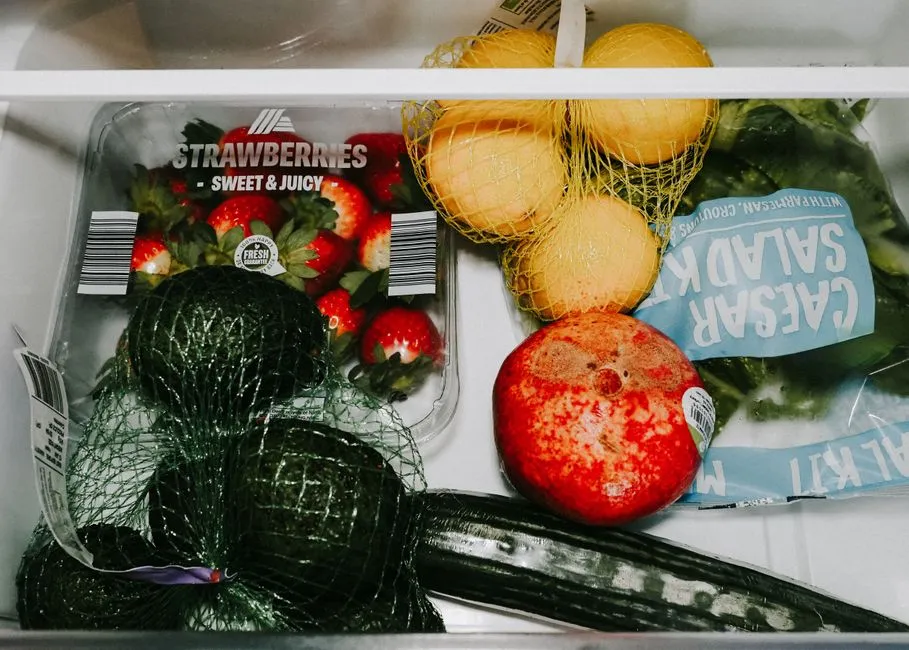
Place dry, unwashed whole citrus in a clean perforated produce bag or ventilated container in the fruit crisper. UC Davis recommends perforated bags in produce drawers for refrigerated fruit and vegetables. The enclosure slows moisture loss; the openings reduce the chance of enclosing the fruit in a stagnant, visibly wet package.
Do not tightly seal wet fruit. If citrus arrives covered in condensation, open the package, inspect for damage, and let visible surface water dry under clean conditions before repacking. Replace soaked paper or padding. The goal is to remove free water without leaving the fruit warming for hours.
Do not cram the drawer. Leave enough space to lift a fruit without scraping or compressing its neighbors. Keep citrus away from a freezing vent or icy back wall. Different citrus types have different ideal commercial storage temperatures, so a household refrigerator is a compromise; regular condition checks remain necessary.
Keep raw meat, poultry, and seafood in leak-proof containers below produce. Do not allow their packages or preparation utensils to contact citrus, especially because cutting through a peel can move contamination toward the edible interior.
How often should stored citrus be checked?
Check counter fruit daily and refrigerated fruit regularly. A net bag makes the top easy to see but can hide the one orange resting underneath. Rotate the package gently and inspect every contact point.
Use the same short routine:
- Look for condensation, juice, or mold before opening the package.
- Lift fruit rather than pouring it onto a hard surface.
- Move intact but drying or slightly softened fruit to the use-first group.
- Remove fruit with a leak, open wound, spreading soft area, mold, or rot.
- Clean and dry a contaminated bag, bowl, or drawer before returning sound fruit.
Label separate purchases if several batches share the refrigerator. Use the older sound batch first, but never let the date overrule present condition. Storage history before purchase is usually unknown, so a recently bought orange can still deteriorate first.
Should whole citrus be washed before storage?
For ordinary household holding, store whole citrus unwashed and wash it just before preparation or eating. Early washing adds surface moisture and handling without improving the storage environment.
Wash the fruit under running water even when the peel will not be eaten. The US Food and Drug Administration explains that washing first helps prevent dirt and bacteria from moving from the surface during peeling or cutting. Do not use soap, detergent, or commercial produce wash. Dry the fruit with a clean cloth or paper towel.
Wash hands with soap and warm water for at least 20 seconds before and after preparation. Use a clean knife, cutting board, juicer, and work surface. Keep those tools separate from equipment used for raw meat, poultry, or seafood unless they have been properly washed between tasks.
How should cut oranges, lemons, and limes be stored?
Once citrus is cut, the whole-fruit counter plan ends. Refrigerate halves, wedges, peeled segments, and fresh juice promptly in clean covered containers. Cover exposed cut surfaces closely to slow drying and protect them from contact in the refrigerator.
Do not put a bare lemon half cut-side down on a refrigerator shelf. Use a small food-grade container or wrap intended for food contact. Label the container when it will not be used the same day, and keep it separate from raw animal foods and their juices.
Return serving leftovers to the refrigerator promptly. Discard cut citrus that has been mishandled or whose time and temperature history is uncertain. Appearance and acidity are not substitutes for correct refrigeration.
What is a practical plan for a mixed citrus bag?
Sort by condition and intended use rather than keeping the retail bag intact. Put the soundest fruit for later into ventilated refrigerator storage. Set aside only the pieces needed soon in a cool counter bowl. Put a dry, intact but aging piece where it will be used first.
Keep smaller mandarins from being crushed beneath grapefruit. Store lemons intended for zest where they will not be abraded repeatedly. Check every group on its own schedule, and remove trouble before it can remain against neighboring peels.
The same condition-first discipline applies to more delicate fruit, though the containers differ. Our guide to storing berries covers that separate low-pressure setup.