How to Choose Ripe Peaches for the Day You Need Them
- How do you choose ripe peaches for the day you need them?
- What should you reject before checking ripeness?
- Why is background color more useful than red blush?
- What does peach aroma tell you?
- How firm should a peach feel?
- Can firm peaches finish ripening at home?
- How do you plan a mixed bag for the week?
- Do white and yellow peaches use the same color cue?
- What is the fastest store-side peach checklist?
- How should you wash, cut, and refrigerate peaches?
- Sources
How do you choose ripe peaches for the day you need them?
Choose peaches by use day, not by red blush. Start with fruit free of bruises, broken skin, wrinkles, and leaking areas. Look at the background color beneath the blush: cream or gold is more useful than green. A peach for today should smell peachy and yield slightly to gentle palm pressure; one for a few days later can be mature and firm, with good background color but no softness yet.
Peaches bruise easily, so the method is observation, aroma, and one light whole-hand check. Repeated thumb pressing damages the fruit and tells you less than a calm comparison across the display.
What should you reject before checking ripeness?
Turn each peach gently and check the whole surface. Leave it behind if it has:
- a deep bruise, split, puncture, or leaking area;
- mold, decay, or a sour or fermented odor;
- a collapsed soft patch rather than slight, even give;
- extensive wrinkling or a dried, shriveled feel;
- a green background color with no sign of cream or gold;
- damage where several fruit have been compressed together.
The FDA advises choosing produce without bruising or damage. Utah State University Extension likewise recommends peaches that are firm to slightly soft and free from bruises. A vivid blush cannot repair broken skin or a soft injury underneath it.
Minor color variation and a naturally uneven blush are not damage. The useful distinction is between cosmetic variation and an area that is broken, wet, decayed, or structurally softer than the rest of the fruit.
Why is background color more useful than red blush?
Background color is the base color of the skin around and beneath the red areas. On a mature yellow-fleshed peach, look for cream, warm yellow, or gold rather than a clear green cast. On paler varieties, the mature background may be creamy rather than strongly yellow.
Utah State University Extension's peach guide calls a creamy or golden undertone the best ripeness sign and says rosy blush differs from one variety to another. Red color can be attractive, but it is not a reliable clock. One variety may be extensively red while another remains mostly gold at a comparable stage.
Use color in this order:
- Identify the background rather than counting red coverage.
- Reject a distinctly green ground color.
- Compare peaches that appear to be the same variety.
- Confirm maturity with aroma, condition, and firmness.
Store lighting can make color warmer or cooler. Move the fruit slightly within the display rather than judging one shadowed patch. Do not scrape the fuzz or skin to expose color beneath it.
What does peach aroma tell you?
A fresh peach fragrance supports ripeness. Smell near the stem end without pressing the fruit against your face. A peach intended for today should generally have a recognizable, clean peach aroma alongside mature background color and slight give.
Little aroma does not automatically mean damage. A cool or mature-firm peach may be less fragrant and can be appropriate for later in the week. A sour, alcoholic, musty, or fermented smell is different: put that fruit back, especially if it also has a leak or soft patch.
Utah State University Extension identifies fresh peach fragrance as a ripeness cue. Treat it as one part of the set, not a guarantee of flavor inside.
How firm should a peach feel?
Use the palm and finger pads, not a thumb. Cradle the peach and apply the lightest broad pressure once.
- For today: choose a mature-colored, fragrant peach that yields slightly and evenly to gentle palm pressure.
- For tomorrow or the next day: choose mature background color with a fresh aroma and a firmer feel.
- For several days later: choose sound, mature-firm fruit with cream or gold background color, then monitor it at home.
- Avoid: rock-hard green fruit, isolated mushy areas, or fruit that collapses under light handling.
The Extension guide says peaches are ready to eat when they give to gentle palm pressure and explicitly warns that squeezing bruises them. Do one check after color and aroma have already narrowed the choice. Do not press every peach in the pile.
“Firm” and “immature” are not synonyms. A mature-firm peach has developed an appropriate background color but has not yet softened to eating texture. A green, hard peach was picked too early; Extension notes that such fruit often shrivels and becomes tough rather than ripening well.
Can firm peaches finish ripening at home?
Yes, provided they were mature when picked. Utah State University Extension says firm ripe peaches with good ground color can become fully ripe and soft in three to four days at room temperature in a loosely closed bag. Check them every day and remove each peach as soon as it reaches the texture you want.
Place fruit in a single layer when possible. Use a loosely closed paper bag, as the Extension source recommends. Keep the bag at room temperature and away from direct heat or strong sun.
Do not use the bag to rescue hard green fruit. The same Extension source says green-picked peaches may develop more juice but do not become sweeter. Good home ripening begins with mature background color at the store.
How do you plan a mixed bag for the week?
Buy stages deliberately instead of asking every peach to be ready at once:
| When you plan to eat it | Background color | Aroma | Feel |
|---|---|---|---|
| Today | Cream or gold | Clear, fresh peach fragrance | Slight, even give |
| Tomorrow | Cream or gold | Present but may be lighter | Mostly firm with the beginning of give |
| In two to four days | Mature cream or gold | Light is acceptable | Firm, never green-hard |
At home, keep the firmer peaches at room temperature and check daily. Move fully ripe peaches to the refrigerator. Extension recommends refrigerating fully ripe fruit; cooling slows further softening but does not reverse bruising or decay.
If the whole group becomes ready together, refrigerate the sound peaches and use the softest undamaged ones first. Remove any fruit that begins leaking or growing mold so it does not soil neighboring peaches.
Do white and yellow peaches use the same color cue?
The principle is the same, but the exact mature shade varies. Look for the characteristic creamy background of a white peach or the cream-to-gold background of a yellow peach, not a universal amount of red. Compare within the same labeled variety when possible.
Freestone and clingstone describe how readily the flesh separates from the pit; they do not replace the maturity checks. A freestone peach can be underripe, and a clingstone peach can be ready to eat.
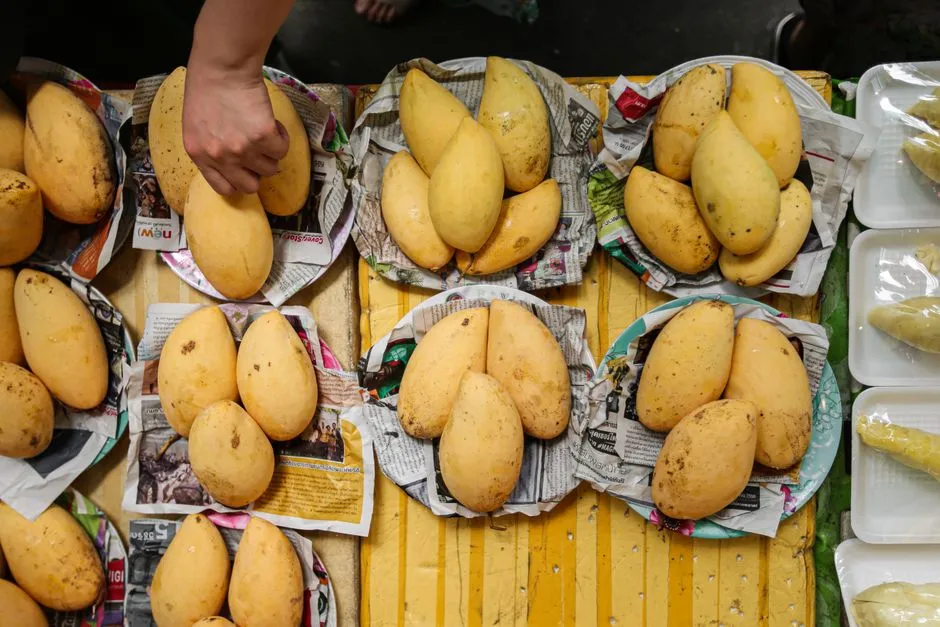
This variety-aware approach also applies when choosing a ripe mango: the base color, aroma, and feel must be read for the particular fruit rather than reduced to one red or yellow target.
What is the fastest store-side peach checklist?
- Reject damage: no bruises, breaks, leaks, decay, or fermented smell.
- Read the background: choose cream or gold rather than green; ignore the amount of blush.
- Smell once: a clean peach fragrance supports readiness.
- Use one palm check: slight even give means ready soon; mature-firm fruit suits later days.
- Buy several stages: match each peach to the day you expect to eat it.
- Monitor at home: loosely bag mature-firm peaches at room temperature and check daily.
- Refrigerate when ripe: move each fruit when it reaches the desired softness.
The sequence protects both accuracy and the peaches. Color and aroma do most of the screening before your hand applies any pressure.
How should you wash, cut, and refrigerate peaches?
Wash your hands with soap and warm water for at least 20 seconds before and after preparing fruit. Rub peaches gently under plain running water just before cutting or eating, then dry them with a clean cloth or paper towel. Do not use soap, detergent, or commercial produce wash.
Use a clean knife and cutting board. Keep fruit away from raw meat, poultry, seafood, and any utensils or surfaces used for them unless those items have been washed with soap and hot water. Cut away damaged or bruised areas and discard fruit that looks rotten.
Refrigerate cut peaches promptly in a clean, covered container. FDA guidance says perishable produce should be held in a clean refrigerator at 40°F (4°C) or below, and all produce purchased pre-cut or packaged should be refrigerated. Cooling is a safety and holding step, not a way to restore damaged fruit.