How to Choose a Ripe Mango Without Squeezing It Silly
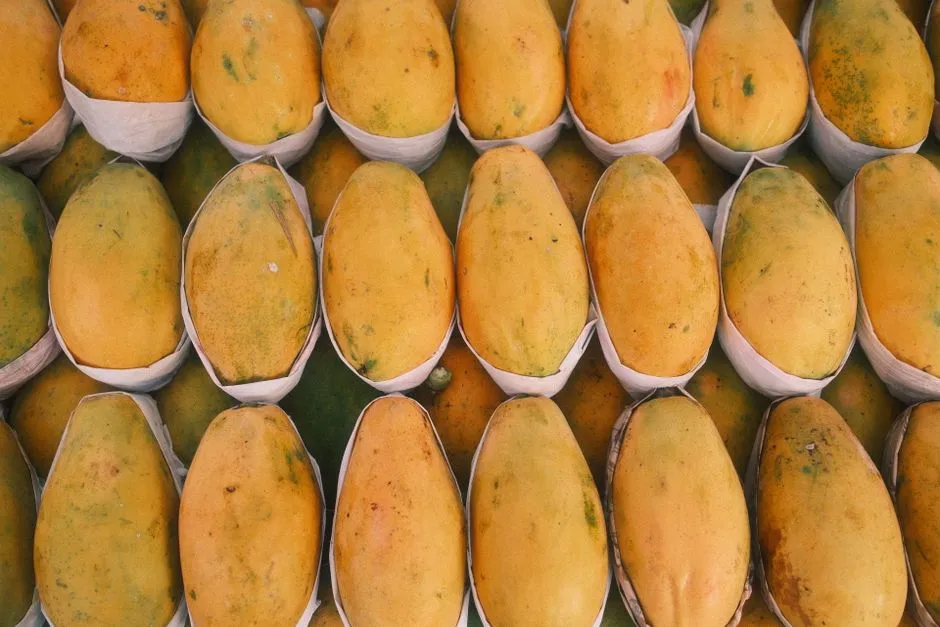
Start with the mango's job
The best mango depends on when you plan to eat it. For tonight, look for fruit that gives slightly under gentle pressure and smells fruity near the stem. For later in the week, choose a firmer mango and let it finish ripening at room temperature. This tiny bit of planning prevents the classic mango schedule: rock, rock, rock, surprise pudding.
Varieties do not all turn the same color when ripe. Some stay mostly green; others become yellow, red, or orange. Treat color as one clue, not the final verdict.
Check the surface before the squeeze
Pick up the mango and turn it slowly. The skin should be intact, with no leaking cracks or broad sunken patches. A few small freckles or superficial marks are not automatically a problem. Deep bruises, split skin, wet spots, or a fermented smell are better reasons to choose another fruit.
The mango should feel substantial for its size. Comparing two similar mangoes in the same bin can help, although shape and variety make this an imperfect test. If one feels oddly light and looks wrinkled, it may have lost moisture.
Use gentle pressure
Hold the mango in your palm and press very lightly with the pads of your fingers. A ready-to-eat mango usually yields a little rather than staying hard or collapsing. Do not dig in with a thumb. That tests your thumb more than the fruit and leaves a bruise for the next shopper.
Softness should feel fairly even. One mushy patch on an otherwise firm mango often signals damage rather than ideal ripeness. If the entire fruit feels very soft, use it immediately only if the skin and smell are still sound.
For other calm, evidence-based shopping habits, browse Fruit Shopping. The goal is a good piece of fruit, not an entrance exam.
Smell near the stem
A ripe mango may have a sweet, recognizably fruity aroma around its stem end. Little or no scent often means it needs more time. A sharp alcoholic, sour, or unpleasant odor can indicate fermentation or spoilage, especially when paired with leaking or very soft flesh.
Smell is helpful but not universal. Chilled fruit and some varieties may be less aromatic, so combine aroma with gentle feel and surface condition.
Ripen it at home
Keep a firm, intact mango at room temperature and inspect it daily. Placing it in a paper bag can concentrate the naturally produced ripening gases; fold the top loosely rather than sealing the fruit in plastic. Check often, because a nearly ripe mango can cross the finish line while you are answering email.
Once it reaches the softness you want, refrigerate it to slow further ripening. Chill cut mango promptly in a clean covered container. Before cutting, wash the outside under clean running water and dry it; the knife passes through the skin on its way to the flesh.
Make the final call after cutting
Ripe flesh should have a pleasant mango aroma and a texture appropriate to the variety. Color ranges from pale yellow to deep orange, so color alone cannot establish quality. Discard fruit with mold, a strongly fermented odor, widespread translucent breakdown, or other clear spoilage.
If your haul also includes delicate fruit, store berries properly rather than letting them share the mango's room-temperature holiday. Different fruit, different plan—and fewer fuzzy surprises.